
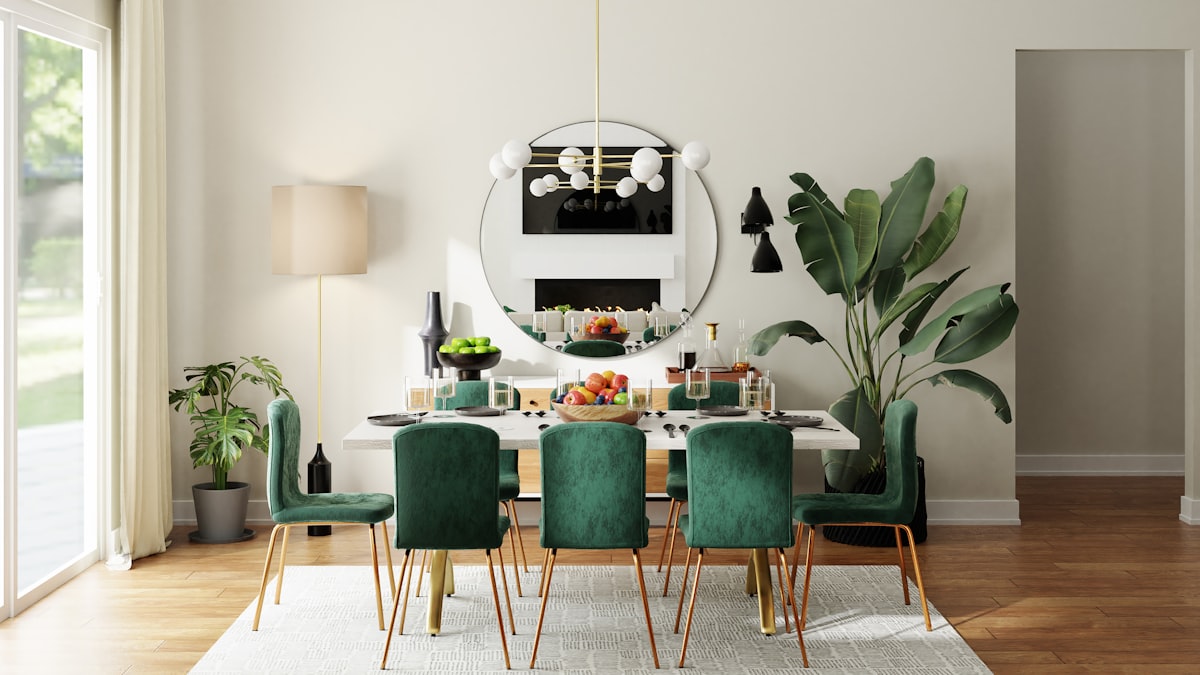
A dining table is perhaps the most socially vital piece of furniture within any home. It is where morning espresso is enjoyed, where children spread out homework, and where evenings stretch past midnight over decanted wine and shared laughter. Selecting the right proportions requires balancing room geometry with hospitality ambition.
The 36-Inch Clearance Rule
The most common design oversight when purchasing a dining table is failing to calculate clearance space. Regardless of whether you select a solid walnut trestle table or an oval stone centerpiece, always maintain a minimum of 36 inches (91 cm) between the tabletop edge and the nearest wall or sideboard.
If the space serves as a primary transit hallway, expand that clearance to 42 to 48 inches to ensure guests can comfortably push chairs back and navigate behind seated diners without friction.
Shape Proportions: Round vs. Rectangular
The Sociable Round Table
Round dining tables (ranging from 48″ to 60″ in diameter) are peerless for intimate social interaction. With no head of the table, sightlines are egalitarian, and conversations flow collectively among everyone seated. Round tables are especially suited to square dining rooms or open-concept kitchen nooks.
The Architectural Rectangular Table
Rectangular tables (72″ to 102″) complement elongated spaces and accommodate larger gatherings with ease. Opting for an extendable mechanism—such as the hidden center leaf in our Astrid Dining Table—gives you everyday compactness with the flexibility to seat 10 to 12 guests during holiday occasions.
“Allow 24 inches of tabletop width per person for casual dining, and 28 to 30 inches per setting for formal meals requiring charger plates, multiple stemware glasses, and bread plates.”
Leg Placement: Trestle vs. Corner Posts
Consider how the table base interacts with chair legs. Corner legs frame the table neatly but restrict where chairs can slide in. Pedestal and trestle bases free up knee space along the perimeter, allowing maximum flexibility when adding extra guests to dinner.